Carnivores
Apart from lions, you can spot leopards, jungle cats, striped hyenas, golden jackals, honey badgers (called ratels), civets, and mongooses.
Gir National Park is known not only for its Asiatic lions but also for its healthy ecosystem. Located in the Saurashtra region of Gujarat, this place has shown the world how conscious effort can bring positive results. This national park was established in 1965 to protect the endangered Asiatic lion. Only two places in the world have lions roaming freely in the wild: Africa and Gir National Park.
It covers around 1,400 sq km of land. It also offers dry forest, rocky hills, and open grasslands. Four rivers (Hiran, Shetrunji, Datardi, and Raval) also flow through this area. Besides lions, you will find deer, chital, hyenas, crocodiles, and leopards. Bird lovers have a strong reason to come here, as the park has more than 300 bird species.
The park has roughly 40 mammal species. Gir National Park is a must-see for anyone who wants a close look at lions and to experience wildlife up close. A safari in Gir National Park provides an opportunity to see how lions that were on the verge of disappearing returned to the ecosystem.
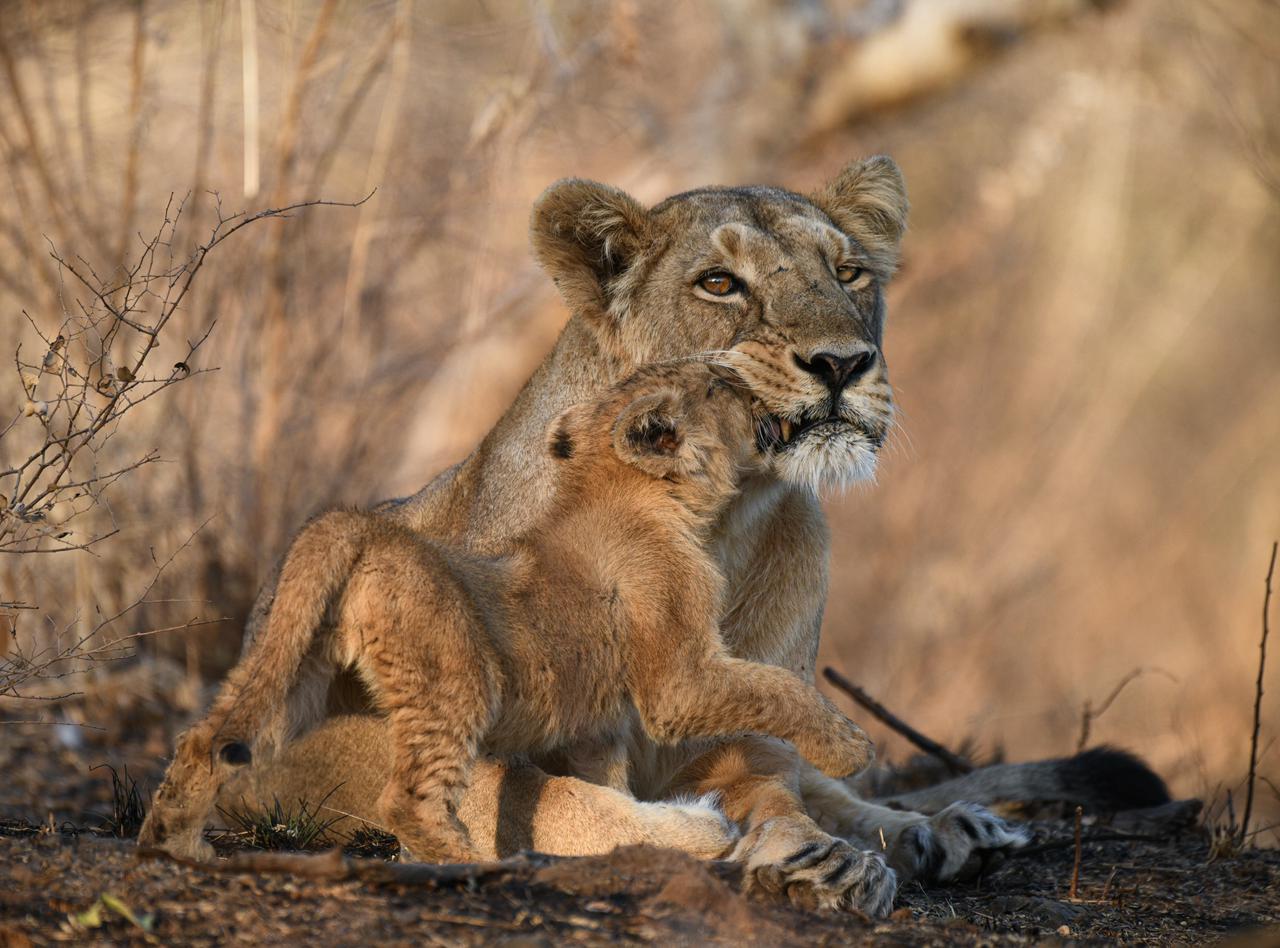
This is the main and most popular safari in Gir. You ride in an open jeep through the core forest area with a trained guide, looking for lions, leopards, and other wildlife in their natural setting. Sightings depend a bit on luck, as animals roam freely here. That's why this safari feels adventurous and exciting, whether it is your first trip or a return visit.
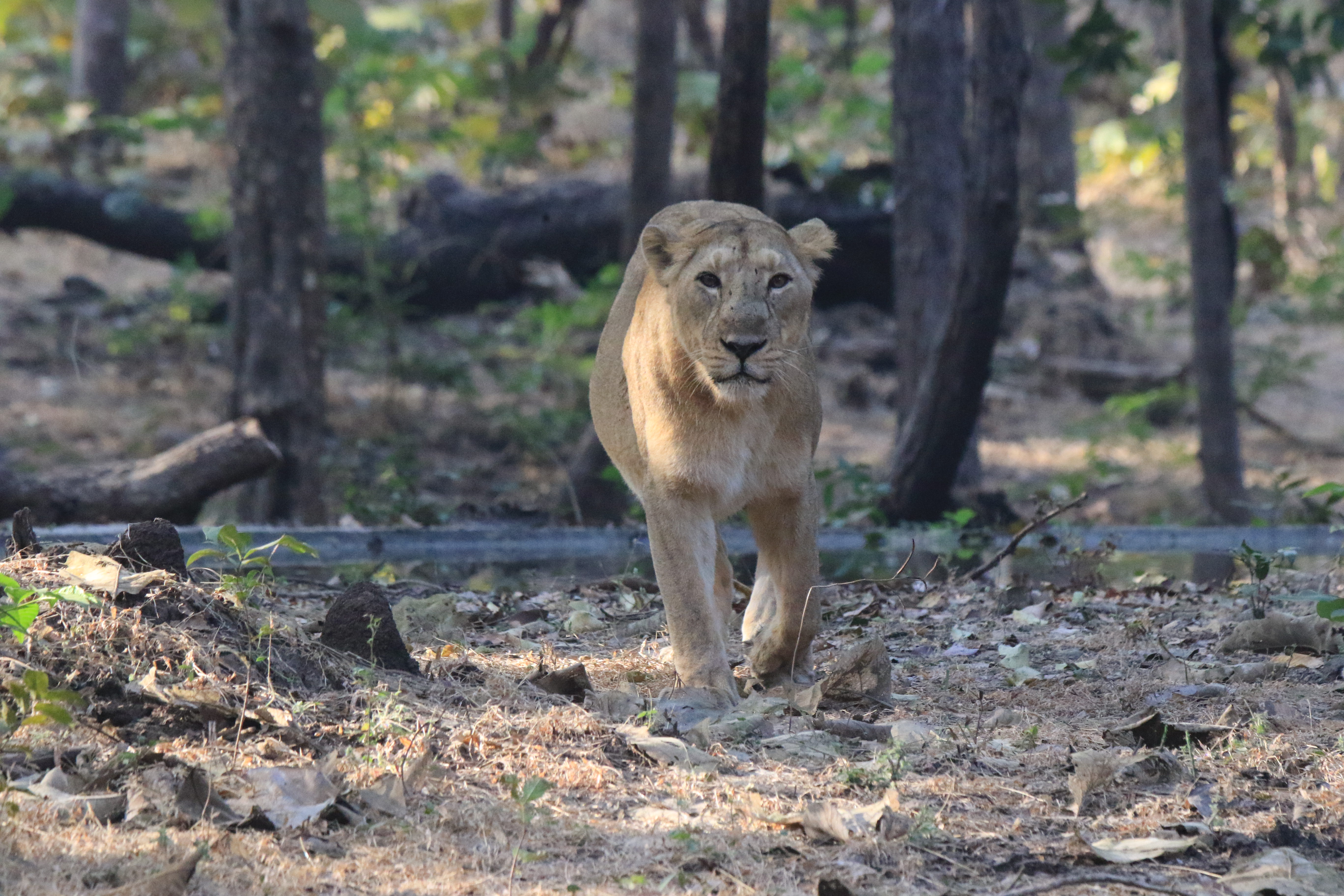
This safari is also called the Gir Interpretation Zone. The interesting thing about Devalia Safari is that it takes place inside a fenced part of the park. It's shorter, usually around 40 to 55 minutes. Here, the chances of spotting lions and leopards are very high. This safari offers the best chance of sightings without spending too much time.
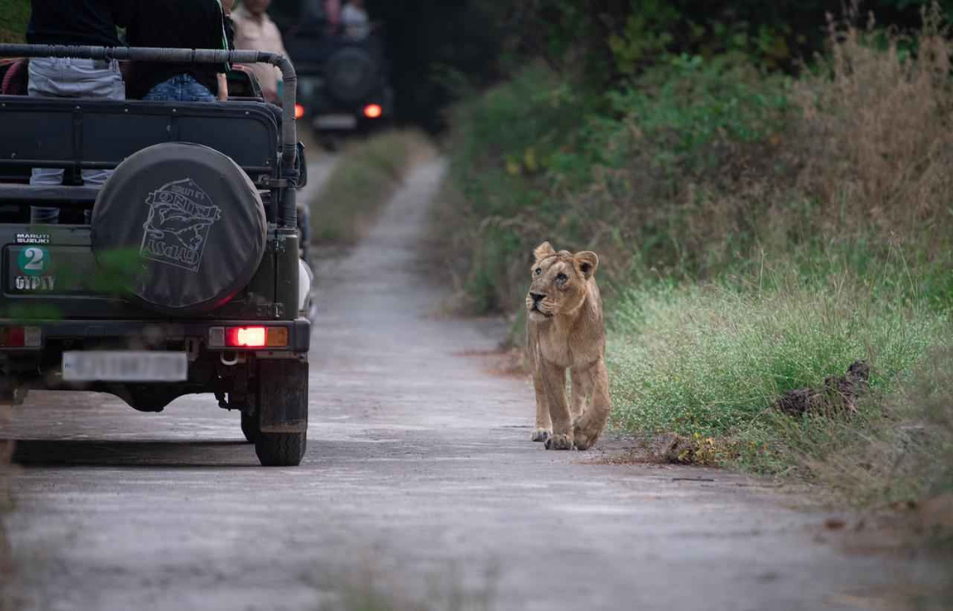
This safari takes place beyond the usual Gir zones. The Girnar Sanctuary is a different section located in the Girnar Hills. On this safari, you cover about 13 km inside the forest, up to an area called Paturan. In addition to being a fresh part of the region, this safari also offers the opportunity to spot wildlife.
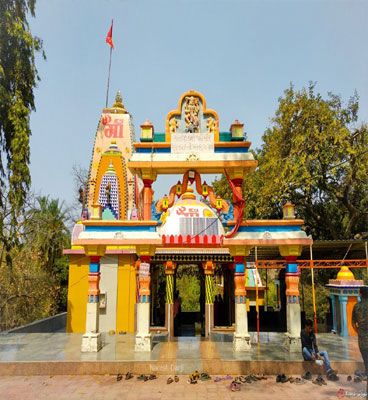
Kankai Mata Temple is around 25 km deep into the Gir forest. You will pass through dense forest along the way. You might spot birds and deer. In some cases, you might also spot a lion because lions use the terrain regularly, just like they do elsewhere in Gir. This ride is a mix of spirituality, faith, and wildlife.
The history of Sasan Gir is the story of the Asiatic lions, which neared extinction and were saved through various conservation measures. Once, Asiatic lions lived across a huge area, including the Middle East, India, and Bengal. But in the 19th century, hunting, deforestation for farming, and conflicts between lions and local people reduced lion numbers.
Soon, lions began disappearing from these places. Only a small number of lions somehow remained in the Kathiawar region of Gujarat. For these lions, Gir forest became their last safe home. The rocky land, thick forests, and inaccessibility helped these lions find safe shelter.
Over the years, the government and local communities protected the lions and their habitat. Eventually, the number of this big cat started rising. Safari in Gir introduces you to a motivating chapter in lion history.
The Asiatic lion population across the subcontinent decreased because of hunting and deforestation. The Gir forest became the only place where a small number of lions survived.
Successive Nawabs of Junagadh grew alarmed as lion numbers were falling. Starting in 1879 and tightened through 1892, they restricted hunting within their private lands surrounding Gir. By 1900, these accumulated decrees had become important in preventing the species' extinction.
A survey recorded approximately 20 Asiatic lions in the Gir landscape. Other estimates put the number of remaining lions at 12. This was the only remaining population of lions ever counted in recorded history.
Junagadh merged with the Indian Union. The Gir forests came under state government management. This led to effective protection and conservation policies.
The Government of Gujarat formally declared the Gir forest area a protected wildlife sanctuary. The government also established a legal framework. Conservation management started getting attention.
The government declared a core area of about 258–259 square kilometres within the 1,412 square-kilometre sanctuary as a national park. Human activity in this core zone began to be restricted, though fully removing settlements took years.
Many Maldhari families living in the Gir Forest core zone began relocating. They settled outside the core area with their cattle. This reduced grazing pressure and human-lion conflict. Ultimately, natural prey species recovered, and lions got more opportunities to hunt.
The number of Asiatic lions reached a record 674 individuals across the greater Gir.
The lion population has increased to 891.
Talking about Gir without mentioning the Maldharis is incomplete. The Maldhari community is a group of herders. For many generations, they have lived inside the Gir forest. Their cattle used to graze where lions lived.
Even though lions hunted Maldhari families' cattle, they did not kill the lions. The livestock became food for this big cat, but the Maldharis never fought back. In fact, they learned to live with this. The government also played a key role by providing money when they lost any animal to a lion.
Living where these lions raised their cubs gave them a deep understanding of these predators, their habits, and personalities. Even today, many Gir National Park guides and trackers from these families use this knowledge to provide visitors with a safe lion safari experience.
Gir is famous for lions, but it also has other animals worth spotting. Together, these animals complete Gir's ecosystem. The Asiatic Lion Gir has become a haven for wild Asiatic lions. That is what makes Gir National Park special.
Apart from lions, you can spot leopards, jungle cats, striped hyenas, golden jackals, honey badgers (called ratels), civets, and mongooses.
Visitors can spot plant-eating animals like chital (spotted deer), sambar, nilgai, chinkara, and wild boar roaming the grasslands and bushes.
Don't ignore the water. The area around the water is a great place to spot wildlife. You can spot marsh crocodiles, monitor lizards, and Indian rock pythons.
With more than 300 bird species, Gir National Park offers bird lovers many reasons to visit. Pygmy woodpeckers, flycatchers, and wood owls are some of them. You will also find six of India's nine vulture species.
More than 2,000 insect species are found here. It is interesting to find them.
Gir National Park is not just about spotting animals; it's also about enjoying the vegetation. Ultimately, plants are a crucial part of any ecosystem and food web.
Gir has dry forests, thorny bushes, and open grassy areas. With more than 500 plant species, Gir's vegetation is different from other places. These include trees, shrubs, climbing plants, and grasses.
Teak is the main tree in Gir. It is common in the eastern part of the forest. You will also find acacia, banyan, jamun, tendu, dhak, ber, and babool. Large trees provide shade. They also keep the ground cool and moist. This helps animals during hot summers.
Casuarina and Prosopis trees grow near the coast. Forest workers planted many of them. They help restore the land. They also help hold the soil together.
Flying lets you reach Gir National Park, enjoy your safari, and get back home the same day. For people with busy lives, this matters. Although Sasan Gir has no airport, you can land at nearby airports and cover the remaining distance by road. Keshod Airport is the closest, at around 60 km away. Another option is Diu Airport, about 73 km away. Rajkot Airport is around 170 km from the park. The best thing about this airport is its strong connections to major cities. After landing, you can take a taxi or bus for the rest of the way.
A train journey is not only full of scenic routes but also a budget-friendly option. For a beautiful, affordable journey, take the train. The nearest railway station is Veraval. It is about 45 to 55 km from Sasan Gir. Another station, a bit farther, is Junagadh station. It is around 65 to 75 km away. If you want a station with connectivity from across the country, consider Rajkot station. It is 160 km away. Taxis and buses are easily available at any of these stations to reach Sasan Gir.
When you travel by road, you get a chance to explore Gujarat further along the way. You can stop at scenic spots, rest for a while, and continue your journey. If you are coming from Ahmedabad, the distance is about 355 to 375 km via NH47 and NH151. From Rajkot, it's a shorter drive of around 160 km via NH27 and NH151. From Somnath or Diu, you can take the Veraval or Una route through Talala, about 65 to 90 km. The best thing is that the roads are mostly in good condition. Your journey will take you through small towns and green farmlands. You can arrange buses and private cabs within minutes. Nearby Attractions
This dam sits quietly inside the forest, right on the Hiran River. The best thing about this spot is its calmness. Seeing marsh crocodiles resting near the water and observing birds flying around makes every moment special. Bird lovers really enjoy this place because so many species show up here. If you like quiet places and slow wildlife watching, this dam is worth a visit during your trip.
This museum shows how the old Nawabs of Junagadh once lived. Inside, you can see paintings, weapons, silver items, royal clothes, palanquins, and big chandeliers from that time. It's a good place if you enjoy history and old stories. The museum stays open from 10:00 am to 5:00 pm. It stays closed on Wednesdays, the 2nd and 4th Saturdays, and public holidays, so check before you go.
Girnar Mountains are a crucial place and hold deep meaning for both Hindus and Jains. Here, people climb up to visit temples like Amba Mata, Neminath, Parshwanath, and Dattatreya. Each temple has its own relevance and story. After reaching the main spot, you realise that the time and energy it takes is worth it. The peaceful environment and beautiful view fill you with a joyful feeling you can't explain in words. Girnar Mountains work as a spiritual break after your Gir safari.
Apart from being one of the most famous Hindu temples, Somnath Temple is full of natural beauty. It stands right next to the sea. You can hear the waves while listening to the temple's bells. Both sounds create a magical moment for visitors. If you want to experience the lively spirit of the temple, visit during Shivratri and Kartik Purnima. This is when festivals, devotees, and worship rituals make the place full of life.
Junagadh Zoo Also called Sakkarbaug Zoo, this is one of the oldest zoos in India and one of the biggest too. It has many kinds of animals, but people mostly come here for the carnivores. You can also see Asiatic lions here, just like in Gir. This makes it a fun stop for animal lovers, especially if you want another chance to see lions.
After your Gir safari, you may want a different experience to change your mood. That's where Diu Island comes in. Open beaches, cool sea air, and quiet roads refresh you. The mood here feels very different from the jungle. When you sit by the beach, watch the sunset, and relax for a while, the moment becomes unforgettable. The atmosphere not only slows you down but also energises you to keep your journey going.
Kankai Mata Temple is deep inside the Gir forest. In terms of distance, it is about 25 km from Sasan Gir. This temple holds great meaning and relevance for Hindu devotees. Visitors need special permission from the forest department to enter, since it lies inside protected land. No one can stay overnight. The best time to visit this temple is early morning, because during this time, the atmosphere is quieter and more peaceful.
Nothing beats a nature walk. If you really want to learn about the vegetation, grass, plants, insects, and other small creatures, you need to get out of the vehicle. Choose a guided nature walk with a forest expert. It is one of the best ways to connect with nature at a relaxed pace.
A Gir safari tour is a chance to eat Gujarati and local dishes. From sweet to spicy flavours, every bite feels special. After a long day of sightseeing, treat yourself to a tasty reward.
Visit small gift shops near the Devalia Interpretation Zone and Sinh Sadan to buy wildlife-themed items. You can buy souvenirs like T-shirts, caps, and books. These items serve as reminders of your time in Gir and become memories of your safari trip in Gir. You can easily find these shops near the main visitor area. Buy something for your family, friends, or loved ones.
One of the best things about Gir is the many photo spots. Kamleshwar Dam and the roads leading toward Girnar Hills are some of the best photo spots. At dusk, you will realise that every moment is worth capturing.
The Siddi community, who live near Gir, have roots in Africa. This community is known for its Siddi Dhamal dance. You can easily find resorts and tour groups that arrange this performance for visitors. Adding this dance to your itinerary adds a cultural element to your Gir National Park safari tour.
| City | Distance | Best Route Option |
|---|---|---|
| Rajkot | 160 km | Via Junagadh bypass roads |
| Ahmedabad | 360 km | NH 947 → Rajkot → Junagadh → Sasan Gir |
| Junagadh | 65 km | Direct via State Highway |
| Diu | 90 km | Via Una → Talala → Sasan Gir |
| Porbandar | 110 km | Via Kutiyana or Mangrol route |
| Somnath | 65 km | Via Veraval → Talala → Sasan Gir |
| Surat | 530 km | Fly to Keshod or Rajkot recommended |
| Mumbai | 900 km | Fly to Keshod or Rajkot; or overnight train to Junagadh |
| Delhi | 1300 km | Fly to Rajkot or Ahmedabad + road transfer |